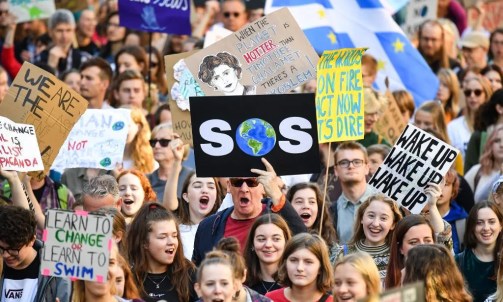
Climate anxiety has long weighed on the national conscience. Moulded by ominous depictions of boiling oceans, sinking continents, and mass extinction, the prevailing narrative insists that emissions reduction is – to borrow Rawlsian vernacular – a lexical priority above all other ends.
As the challenges of the energy transition become increasingly apparent, the contingent of sceptics grows larger and louder. Yet both sides of the debate presuppose a trade-off between environment and economics when no such dichotomy exists. Government-led decarbonisation won’t just impoverish the nation but also erode our climate resilience. Prosperity, on the other hand, represents the best climate policy.
Let’s start with a sobering statistic. The United Nations Intergovernmental Panel on Climate Change (IPCC) estimates that global surface temperatures rise by 0.45°C per trillion tonnes of carbon dioxide emitted. In 2023, Australia’s CO2-equivalent emissions amounted to 432.9 million tonnes.
Therefore, if Australia were to magically become a zero-emission economy tomorrow morning, the effect on global surface temperatures would be 0.005°C over 25 years. So small is our carbon footprint that China burns more coal every week than we do in a year.
On the other hand, the costs of an imperceptibly cooler planet are extortionate. According to a 2023 report by Net Zero Australia, the ‘delivery of an energy transformation’ will require up to $9 trillion in capital expenditure before 2060. This figure doesn’t include the reduction in consumption and investment that follows on from heftier energy bills. It doesn’t capture the damage to productivity and living standards when a country forfeits its greatest competitive advantage. And it doesn’t consider the opportunity cost of the federal government (also known as the taxpayer) spending $9 billion dollars per year on legislated emissions targets. That’s four ways in which the Net Zero mandate is draining our wealth.
For years, the activist class has complained that the wrath of the elements hits poor nations hardest. They’re right – which is precisely why prosperity is the best defence. People are safer when they have access to air conditioning, quality healthcare, and food security, all of which depend on wealth and affordable energy.
Prosperity even protects us against extreme weather events that don’t conform to the narrative. A 2019 study published in the Lancet found that cold weather claims 14 times as many Australian lives as hot weather, largely due to inadequate insulation. Socioeconomic status and energy poverty remain two of the greatest predictors of vulnerability to weather-related illness. The solution is not to make people poorer.
Prosperous nations also have the means to bolster climate resilience through large-scale adaptation initiatives, sophisticated disaster detection apparatus, and coordinated response systems. Bjorn Lomborg, the serially pragmatic founder of the Copenhagen Consensus, points to the stark difference in adaptive capacity between two low-lying nations, Bangladesh and the Netherlands.
He states that, ‘The Netherlands, after a devastating flood in 1953, invested heavily in flood prevention measures, developing a highly effective system of dams and storm-surge barriers. In contrast, much poorer Bangladesh did not make that investment and continues to face large-scale flooding, with significant human and economic costs.’
Meanwhile, the myth that Net Zero will make us wealthier continues to persist. This can only be true under a series of fanciful assumptions. Among them are that global reliance on fossil fuels is falling (it’s not), that the government can pick winners successfully (it can’t), and that renewable energy will revitalise Australian manufacturing (it won’t).
The fantasy is already unravelling. Electricity prices have tripled over the last 20 years. Domestic industry has shrivelled. Every major renewable energy project has suffered from cost blowouts. Rural and low-income households have borne the brunt of a transition powered by government coercion. All the while, global emissions have continued to climb.
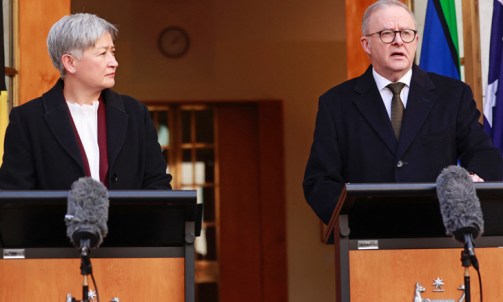
Even under a best-case scenario, any purported gains from the energy transition would only take effect in the distant future. But the government says that we must take ‘urgent action to adapt to the impacts of a changing climate’. The irony is striking. If climate change truly poses an immediate threat, why would we defer prosperity – our greatest tool for building climate resilience – for the sake of some promised long-term benefit?
The Superpower Institute exemplifies the folly of the argument. It describes climate change as a ‘wicked problem’ and surmises that ‘Australia’s full participation in the world’s move to achieve Net Zero global emissions is the only credible path to … promoting Australia’s economic prosperity’. There’s just one caveat: ‘success requires investing 5 per cent or more of our national income in the zero-carbon industries for several decades’.
To be clear, it’s entirely possible that the rise of low-carbon technologies will present new economic opportunities for Australia. This does not justify (and should not require) aggressive central planning or the prescription of an arbitrary emissions target.
The conclusion is inescapable: legislating decarbonisation is an act of self-sabotage no matter the threat posed by climate change. The denialists and the alarmists may not agree on much, but they ought to unite over a shared disdain for existing mandates – and a shared love of prosperity.