If the Treasurer was serious about achieving a fairer superannuation system, the last thing he would do is demand the power to modify the law as he sees fit without the consent of Parliament.
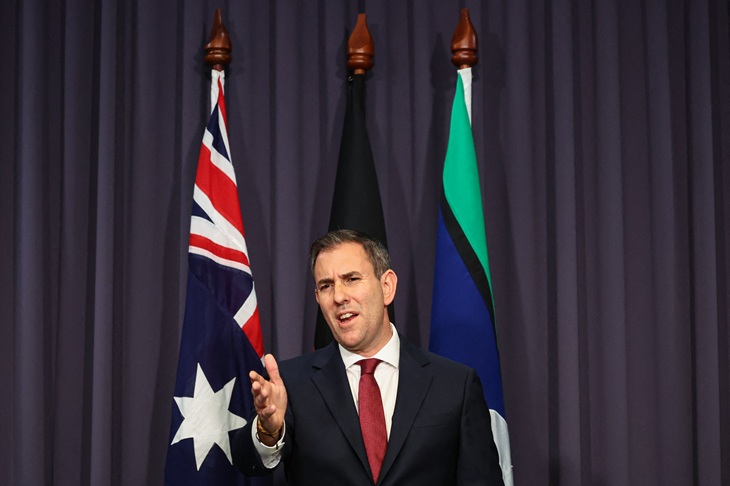
Back when the federal government’s proposal was announced, Treasurer Jim Chalmers said the move was to make ‘Australia’s world-class superannuation system more sustainable and fairer’.
One can debate whether Australia’s superannuation system is world-class, but what is beyond dispute is that when it comes to the law, the fairest thing is that everyone subject to the law is subject to the same law. This is equality before the law, a cornerstone of the rule of law.
But buried within the federal government’s legislation to tax unrealised capital gains in what are currently considered high-value superannuation accounts, is an extraordinary new power to unilaterally change the law.
Under section 296-60 of the Better Targeted Superannuation Concessions and Other Amendments Bill 2025, the Treasurer would have the power to make ‘modifications’ to the statutory definition of ‘withdrawals’ and ‘contributions’ that make up a person’s superannuation balance.
If the net change in withdrawals and contributions a person makes to their super account in a year takes the balance above a certain level, the ‘large superannuation balance threshold’, 15 per cent of the increase above the threshold – for now set at $3 million – would be taken by the government.
As if it were not enough to violate basic taxation principles by raising revenue from money that a person has not actually received, the proposal would violate basic rule of law principles by empowering the Treasurer to redefine the law.
What is worse, the proposed bill explicitly allows the Treasurer to make changes to the law ‘in relation to an individual in different ways’, depending on ‘the individual to whom the modification relates’, or any other matter.
It says a lot about the incoherent excesses of the legislative drafting that the bill would empower the minister to make modifications to the law in relation to an individual depending on who the individual is. But the plain reading of the provision is clear – different people could be subject to different standards or a modified definition of their tax obligation depending on the whim of a minister of the Crown.
The explanatory document supplied with the bill asserts that this extraordinary rulemaking power is required so the ‘laws can operate effectively and as intended’ and to ‘safeguard the regime by ensuring it works appropriately’.
If the Treasurer needs this power to change the law so as to smooth over unintended consequences or to make the law work as intended, this is proof that the law itself is fundamentally flawed.
Seizing unilateral power to amend the law on a case-by-case basis according to the potential revenue that can be raised would be enough to make anyone conclude it is nothing more than a brazen tax grab by the federal government.
The federal government has not directly addressed this criticism, but it is likely to argue that Parliament delegating power to the minister is standard practice. This is correct, but only up to a point. The Parliament can delegate to a minister the power to make regulations to clarify how a law operates – but not to change the very law itself.
In the Westminster system of government, the elected Parliament is responsible for creating laws while ministers administer the laws. Separating these functions was developed as a protection against despotism.
Australia’s experience during the pandemic, when ministers and ‘public health officials’ exercised broad rule-making power without oversight by parliament, often with parliament being shuttered altogether, highlighted how vulnerable these traditional safeguards are.
It is up to Parliament to exercise its constitutional responsibilities and ensure that the government of the day does not seek to despotically grab power. Parliamentarians of all persuasions should be aghast at the Albanese government’s proposal.
Morgan Begg is the Director of Research at the Institute of Public Affairs