With Year 12 students recently receiving their hard-earned ATAR scores, the 2025 QS World University Rankings on sustainability offers a compelling guide if they are seeking to avoid a university education filled with climate alarmism.
Using a methodology comprised of indicators designed to grade institutions based on their environmental, social, and governance (ESG) efforts, QS has helpfully identified which universities have a penchant for political action over academic endeavour.
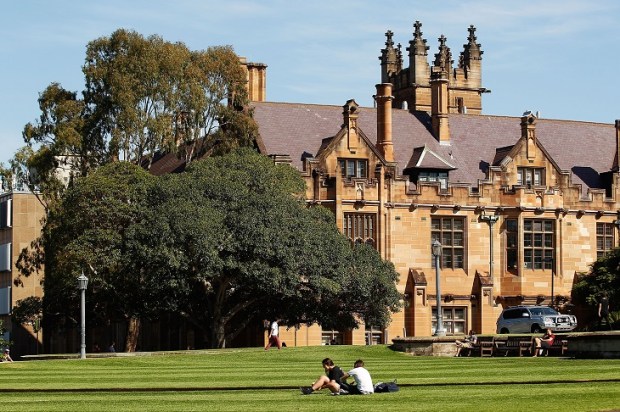
True to form, Australia’s universities are world leaders in climate activism with the University of Melbourne ranked equal ninth, the University of Sydney placed eleventh, while the University of New South Wales came in at equal twelfth.
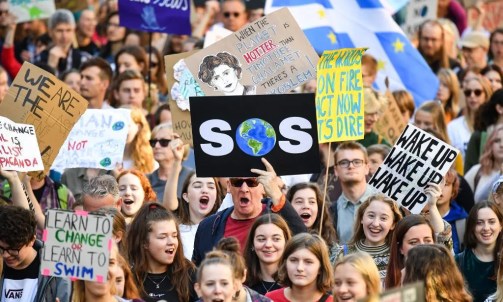
To measure ‘environmental impact’, QS rankings assess institutions across three areas: environmental sustainability, environmental education, and environmental research. Universities are awarded points for having a Net Zero commitment, a policy on climate strategy, and onsite renewables. Offering climate science and sustainability courses, having a research centre focused on sustainability, and policies on sustainable investment also boosts the university’s score. And it is not just institutional action that QS looks for, but engagement from the university community. Staff perceptions and the existence of a student society focused on the environment also impacts grading.
Scored out of 100, all three Australian institutions in the top 20 have scores in the 80s to high 90s for ‘environmental impact’. However, life is a series of trade-offs. If universities are winning when it comes to activism, what is falling by the wayside?
According to the Times Higher Education’s World University Rankings, it is teaching and research that suffer. This year, 17 Australian universities slipped down the ladder, with the elite Group of Eight institutions experiencing the greatest falls. Among Australia’s top ten universities, the average teaching score has fallen from 48.2 to 46.9 and the average research environment score fell from 59 to 57.4.
It is no coincidence that as Australia’s top universities achieve high scores for environmental activism, they are failing in their core mission of teaching and research.
The historical purpose of a university is the growth of the individual through the imparting of knowledge and the cultivation of a culture that makes sense of it. For a thousand years students have been introduced to the Western intellectual tradition which offered real insights into the human condition and universal values in a spirit of free inquiry.
Today, it seems, the cultural mission of universities is to instil students with the modern activist fads of ESG and DEI. ‘Sustainability’, ‘tolerance’, ‘equality’, and ‘inclusivity’ are the new virtues students are to embrace, while our intellectual heritage falls by the wayside.
Despite claiming to promote free inquiry, universities impose political correctness, ideological conformity, and a critical rejection of Western cultural traditions. The relatively recent obsession with sustainability testifies to this shift in the tertiary sector. This issue has been elevated as a top priority issue for universities. Challenging the narrative is met with condemnation.
Universities are increasingly sacrificing their institutional neutrality by taking a stand on highly contentious political issues. Cass R. Sunstein writes in his book, Campus Free Speech: A Pocket Guide, ‘…if the university is to perform its social role, it cannot, realistically speaking be “the critic”.’
Today, universities across the Western world are increasingly adopting ideological positions in formal policy documents and Australian institutions are no exception. The Institute of Public Affairs’ Free Speech on Campus Audit 2023 found across our 42 universities in 2023 there were 77 strategic commitments pledging allegiance to Indigenous issues, gender inequality, and sustainability.
Universities which embrace an ideological position as an institutional goal are at odds with the principles of free inquiry. A university cannot be dedicated to one side of an argument and remain open to challenging perspectives. Sunstein concludes it is not for a university to make judgements; rather, the university’s community of individuals should be making judgements for themselves and contesting – in open debate – those ideas with which they disagree.
The prioritisation of activism in universities appears to have come at the expense of teaching, learning, and research. Even more significantly, it has come at the expense of free speech. Debates about climate change, Indigenous issues, or affirmative action are more often than not off the table because the university has taken an institutional position, effectively censoring further debate.
If universities continue along this path to mediocrity, elevating political activism above their core mission of teaching and research, their rankings will no doubt continue to fall. A return to first principles such as institutional neutrality, free speech, and academic freedom would be the first steps on the long road to recovery.
Brianna McKee is a Research Fellow and the National Manager of Generation Liberty at the Institute of Public Affairs.