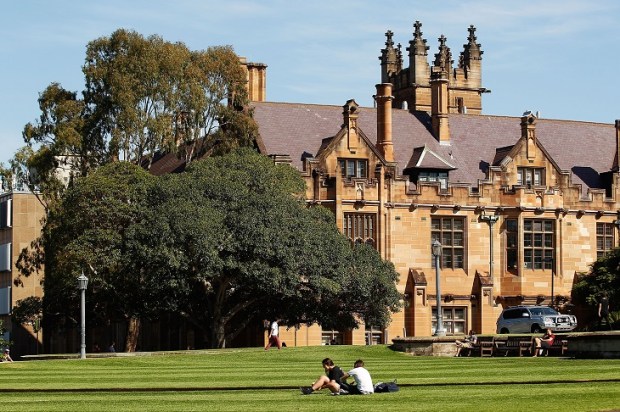
The dramatic fall of Australia’s universities in the recent Times Higher Education’s World University Rankings (THE rankings) 2024 was entirely predictable.
THE rankings are one of the most comprehensive evaluations of university performance globally. It assesses institutions across five key areas: teaching, research environment, research quality, industry engagement, and international outlook.
This year, 17 Australian universities slipped down the ladder with elite Group of Eight (G8) institutions suffering the greatest losses, with declining reputations in teaching and research cited as prime concerns. Among Australia’s top ten universities the average teaching score has fallen from 48.2 to 46.9 and the average research environment score fell from 59 to 57.4.
While the University of Melbourne remains Australia’s highest-ranked university it registered its worst performance, falling two places from 37 to 39. Monash University dropped four places from 54 to 58, and the University of Sydney fell one place to 61. Meanwhile, the University of Queensland dropped seven places to 77 and the Australian National University fell five places to 73.
Although, THE rankings attributes part of the decline to financial woes following the cessation of the pandemic era of government handouts, Australian universities have ever growing rivers of gold flooding in from waves of international students who pay handsomely to study (and live) in Australia.
Today, aside from government grants, international students make up the largest single source of revenue for many universities. The latest figures reveal Australian universities earned $8.57 billion from international student fees alone in 2022, so clearly finances are not a major concern for these institutions.
However, what has occurred is the shift in the university model from education towards the business of maximising revenue, which has contributed to declining standards. This major fall in university rankings has also coincided with a rise in censorship and bureaucracy.
Research by the Institute of Public Affairs shows that since 1996, the number of non-academic staff at Australian universities has increased by 72 per cent while the number of teaching and research staff employed has increased by 47 per cent.
This has led to the rise of censorship on campus. The expansion of university administrative departments inevitably results in a greater regulation of university life. This limits expression on campus by academics and students alike.
The IPA’s Free Speech on Campus Audit found 38 of Australia’s 42 universities (90 per cent) are rated ‘red’ for having policies that are hostile to expression, an increase from 33 in 2018 and 31 in 2017. The total combined hostility scores of all Australian universities have more than doubled since 2016.
An example of a hostile policy in action is the University of Wollongong’s Inclusive Language Guideline which instructs students to avoid words like ‘man’, ‘mothering/fathering’, ‘ladies’, and ‘wife’.
Regulation of speech results in the regulation of thought. Universities cannot be open to genuine debate while requiring staff and students to tiptoe around words they can and cannot use.
With the growth of bureaucracy and censorship on campus, universities are hard-pressed to be the drivers of innovation they once were. The mission of a university is to advance people, society, and knowledge. However, bureaucracy leads to censorship which has a chilling effect on free expression and a culture of intellectual inquiry.
If Australian universities want to climb back up the rankings ladder, a great start would be consigning the culture of censorship to the dustbin of history, as well as thinning the ranks of finger-waving administrators.
Brianna McKee is a Research Fellow and the National Manager of Generation Liberty at the Institute of Public Affairs.