The World Health Organisation (WHO), the health agency of the United Nations, is drafting a number of new documents which aim to radically change the response and readiness for future pandemics. These pandemic treaty reforms include extensive amendments to the 2005 International Health Regulations (IHR) and a new Pandemic Regulation, which are intended to govern the relationship between the Organisation and its 194 Member States.
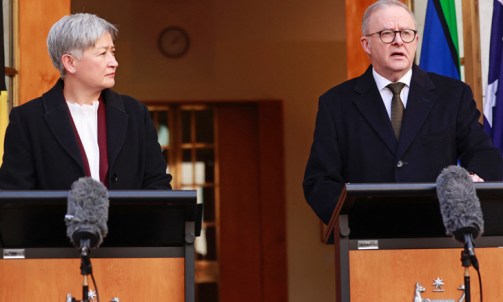
Last Tuesday Australia’s Prime Minister Anthony Albanese received a letter co-signed by a group of 14 cross-party Members of Parliament raising serious concerns about the proposed amendments to the International Health Regulations and the WHO Pandemic Treaty.
The parliamentary letter reminds the Prime Minister that ‘the WHO has demonstrated through the Covid period that its global approach to providing recommendations to respond to actual or perceived public health emergencies consistently resulted in more damage than was prevented and has caused untold losses both economically and socially’.
It then goes on to explain the Prime Minister that the World Health Organisation (WHO) has no power under its own constitution to implement a Pandemic Treaty which goes well beyond its jurisdiction. This letter concludes:
The IHR Amendments and the WHO Pandemic Treaty will transform the WHO from an advisory organisation to a supranational health authority dictating how governments must respond to emergencies which the WHO itself declares. For these reasons, that outcome is well outside the jurisdictional competence of the WHO and WHA, and in any event, is unacceptable to many Australians. We call on the Government to reject the IHR Amendments and the WHO Pandemic Treaty…
The new WHO Pandemic Treaty will require the approval of at least two-thirds of WHO Member States (i.e. 131 countries), and would be subject to its national ratification process. But the International Health Regulations can be amended by only 50 per cet of member states (98 countries).
The proposed agreements are due to be voted upon by the 194 Member States in the week of 27 May 2024. If passed, these agreements will give the WHO extraordinary powers to declare anything they want a ‘pandemic risk’, with the correlating power to enable the Organisation to implement lockdowns, mandate vaccine and apply other measures such as censorship and population surveillance.
Experts who have worked for the United Nations have expressed serious concerns about these radical changes, arguing that they will usurp the sovereignty of all States. According to Ramesh Thakur, former Assistant Secretary-General of the United Nations, ‘[t]he set of changes to the architecture of global health governance will effectively change the WHO from a technical advisory organisation offering recommendations, into a supranational public health authority telling governments what to do.
The working groups involved in these negotiations must follow the UN principles and guidelines for international negotiations. However, according to Dr David Bell, a former medical officer and scientist at the WHO, calling on the State Members to vote on 27 May is unlawful by the WHO’s own guidelines since it violates the International Health Regulations.
Article 55(2) of the HRA, which sets out the procedure to be followed for amending the document, determines that ‘the text of any proposed amendment shall be communicated to all State Parties by the Director-General at least four months before the Health Assembly at which it is proposed for consideration’. However, as Dr Bell points out, this provision has been violated because the proposed amendments ‘have been developed with unusual haste, on the premise that there is a rapidly increasing urgency to mitigate pandemic risk’.
The International Health Regulations (IHR) consist of a multilateral treaty binding all the 194 Member States which ratified these regulations and the World Health Organisation. In this context, 307 proposed amendments to the IHR are being currently negotiated by the ‘Working Group on Amendments to the International Health Regulations’ (WGIHR).
One of the reasons to initiate the amending process to the International Health Regulations is the express concern of the World Health Organisation that its Member States did not satisfactorily comply with their obligations under the IHR during the ‘Covid-19 Public Health Emergency of International Concern’.
Under the proposed amendments, Article 49.5 of the IHR the WHO Director-General will elect all the members of the Emergency Committee tasked to make final determinations regarding pandemic measures.
Under Article 42, these determinations will be ensured by a ‘National IHR Authority’ established by each of the State Members at the national level, charged with the task to coordinate the implementation of the International Health Regulations within the territory of the State Member.
Under the proposed regulations a ‘public health emergency’ would not even have to be real because ‘pandemic emergency’ can be ‘likely’ and associated with ‘public health risk’. At the event of a ‘potential’ public health emergency, the WHO Director General will have the power to order lockdowns, travel restrictions, forced medical examinations, mandatory vaccinations, and isolation and quarantine.
Vaccine passports are also discussed. They are called ‘health documents’ – a global system of health certificates relating to testing, vaccination, prophylaxis and recovery. Personal medical information will be supplied to the WHO and it can be disclosed to others.
Furthermore, freedom of information will be severely curtailed by means of mis-and-disinformation policies combined with the control of research and censoring of scientific debate.
Just to give another example, these amendments to the IHR propose that the present reference in Article 3 to ‘full respect for the dignity, human rights and fundamental freedoms of the person’, be replaced by ‘equity, coherence and inclusivity’. This would represent the replacement of the vocabulary traditionally adopted by the international human rights movement, as properly expressed in the Universal Declaration of Human Rights, with a language that is more in line with the present Woke movement and its radical agenda.
The second document pending approval by State Members is the new ‘Proposal for the WHO Pandemic Agreement’. It is required that all the States implement ‘collaborative surveillance’ and surrender to the WHO their power to decide whether anything may be a pandemic.
Article 4 of the proposed Pandemic Agreement states that the WHO will be able to adapt necessary guidelines, recommendations and standards about ‘environmental, climatic, social, anthropogenic and economic factors [that] increase the risk of pandemics.
Under its Article 5, entitled ‘One Health’, anything the WHO thinks may be an environmental concern, or a social concern, will suffice to activate its own power to interfere and to change everything radically. For example, the WHO will be empowered to decide whether livestock farming or any other food farm poses a health risk, or whether a business may cause an adverse effect on ‘climate change’.
Article 14, entitled ‘Regulatory Strengthening’, says that the WHO will prepare regular reviewing practices of national policies and strategies. This means the WHO will make a final decision about ‘emergency declaration’, thus having the power to impose whatever it wants and sidestep any domestic legislation.
Under Article 18, entitled ‘Communication and Public Awareness’, the WHO aims at ‘re-educating’ the populations of the world to make more compliant, and not hesitant, to do whatever the Organisation freely wants.
If a State Member desires to withdraw from the proposed Pandemic Agreement it can only be done two years after it was signed into law, and such withdrawal will take a full year to be finally accomplished. In other words, a party is in it for at least 3 years no matter what. The Agreement will be a five-year agreement to be revised every five years.
Established on 7 April 1948, the World Health Organisation is the specialised agency of the United Nations responsible for international public health, receiving voluntary contributions from private and public partnerships. Since most of its income presently comes from ‘voluntary contributions’, the largest private donors to the Organisation are The Bill & Melinda Gates Foundation ($592 million) followed by the Gates-run GAVI – Vaccine Alliance ($413 million).
Dr Richard Muller, Emeritus Professor of Physics at the University of California-Berkeley, is now convinced that Covid was ‘a million-to-one proposition to have arisen naturally’. Instead, Professor Muller argues that it is ‘extremely likely’ that the virus was released from a lab at the Wuhan Institute of Virology, in China.
Covid was declared by a ‘global pandemic’ after the WHO’s Director-General, Tedros Adhanom Ghebreyesus, visited Beijing to meet with President Xi Jinping, on March 11, 2020. It was only after this meeting that the WHO declared Covid a ‘public emergency of international concern’. Writing for Foreign Policy, Hinnerk Feldwish-Drentrup comments:
‘Beijing succeeded from the start in steering the World Health Organisation (WHO), which received both funding from China and is dependent on the regime of the Communist Party on many levels. Its international experts didn’t get access to the country until Director-General Tedros Adhanom visited President Xi Jinping at the end of January.’
In their February 2020 ‘Report of the WHO-China Joint Mission on Coronavirus Disease 2019 (Covid-19)’, the WHO congratulates the Chinese Communist regime for its ‘uncompromising and rigorous use of non-pharmaceutical measures’, including lockdown techniques. To a great extent, these lockdowns were subsequently adopted by other nations with serious consequences to basic human rights and the global economy.
According to Steve Tsang, director of the China Institute at the University of London, ‘…with WHO presenting China’s responses in a positive light, the Chinese government was able to make its propaganda campaign to ignore its earlier mistakes appear credible and to ignore the human societal, and economic costs of its responses.’
The WHO went even to the lengths of deeply praising the people of China for reacting to government responses ‘with courage and conviction’. ‘The community has largely accepted the prevention and control measures and is fully participating in the management of self-isolation and enhancement of public compliance,’ the Organisation’s report says.
Of course, not mentioned in this report is the fact that anyone who ignored these draconian measures faced jail terms of up to 10 years. This was so if the consequences were not considered very serious. Otherwise, the person would actually face ‘life sentence or death’. As noted by Dr Mareike Ohlberg from the Berlin-based Marcator Institute for China Studies, the WHO ‘preached confidence in the Chinese government, which does not want to make transparent how the population suffered’.
By promoting the international health guidelines during the alleged pandemic, the WHO violated, without providing any justification other than the example of China, its own Constitution which defines health as ‘a state of complete physical, mental, and social well-being and not merely the absence of disease and infirmity’.
For example, its vaccination campaign completely ignored accumulated safety concerns about the scale of adverse reactions, on the one hand, and diminishing efficacy after successive doses, on the other. According to Ramesh Thakur, former Assistant Secretary-General of the United Nations,
‘Health includes mental health and well-being and is highly dependent on a robust economy, yet the WHO-backed package of measures to fight Covid have been damaging to health, children’s immunisation programs in developing countries, mental health, food security, economies, poverty reduction, educational, and social well-being of peoples. Their worst effect was grievous assaults on human rights, civil liberties, individual autonomy, and bodily autonomy.’
It is undeniable that many countries faithfully followed WHO’s guidelines since the start of the ‘pandemic’. For example, the Australian authorities, both federal and state, faithfully accepted the very alarmist and totally inaccurate WHO’s prediction of 3.4 per cent mortality, and suddenly brought about disruptions of personal freedoms that cost millions of jobs and the closing down of numerous businesses. This included following the ‘advice’ of the World Health Organisation about the ‘safety’ and ‘efficacy’ of mRNA vaccines.
However, we now know that mRNA vaccines prevent neither infection nor transmission of the virus. For example, a study by Cleveland clinic researchers found that, among 48,344 working-aged clinic employees, those not ‘up-to-date’ on vaccination had a lower risk of Covid than those ‘up-to-date’. ‘If a vaccine fails to stop disease transmission, then the idea that you need to vaccinate other people so that I’m protected is just false,’ says Dr Jayanta Bhattcharya, a professor of medicine and health research and policy at Stanford University.
Since the beginning of Covid vaccination the official narrative in Australia and other parts of the world is that these vaccines are safe, efficacious, and working well. However, this claim is now found to be untrue, as demonstrated by both the science and the statistics.
The amendments to the International Health Regulations (2005) (IHR) and the new WHO Pandemic Agreement are due to be voted in the week of May 27 at the 77th World Health Assembly. ‘They amount to a WHO power grab at the behest of Big Pharma and Big Donors,’ says Ramesh Thakur. Professor Thakur further explains:
‘If adopted, they will consolidate the gains of those who have benefited from Covid-19, concentrating private wealth, increasing national debts, and decelerating poverty reduction/ expand the international health bureaucracy under WHO; shift the centre of gravity from common endemic diseases to relatively rare pandemic outbreaks; create a self-perpetuating global biopharmaceutical complex; shift the locus of health policy authority, decision making, and resources from the state to an enlarged corps of international technocrats, creating and empowering an international analogue of the administrative state that has already thinned national democracies. It will create a perverse incentive: the rise of an international bureaucracy whose defining purpose, existence, powers, and budgets will depend on outbreaks of pandemics, the more the better.’
Fortunately, Australia and all the other Member States still have the authority to reject these dangerous proposals as they would endow the WHO with the extraordinary power to become a global legislator on the advent of ‘health emergency’ which is derived from any alleged global pandemic. The Department of Health is involved in the IHR while the Department of Foreign Affairs and Trade is responsible for the Pandemic Agreement.
The Australian government has the moral (and legal) obligation to reject these international treaty reforms in their entirety. The drafts of these documents proposed by the WHO contain wide ranging changes that would make the public health responses of the last four years look tame.
Arguably, such a horrible idea could only come from an Organisation having notorious links not only to the Chinese Communist Party but also to the big pharmaceutical industry, which began to perceive the growing opposition against vaccine mandates. To conclude, the global health policies proposed by the World Health Organisation are an attempt to remove our national sovereignty and they will have disastrous consequences for the rule of law and enjoyment of our basic human rights and freedoms.
Prof. Augusto Zimmermann PhD, LLB, LLM, CIArb, DipEdis a former Law Reform Commissioner with the Law Reform Commission of Western Australia. He is also Head of Law at Sheridan Institute of Higher Education, in Perth, Western Australia, and a former Associate Dean (Research) at Murdoch University, School of Law. During his time at Murdoch, Professor Zimmermann was awarded the Vice Chancellor’s Award for Excellence in Research, in 2012.